Choosing a Home Lift for a Wheelchair User
Published on
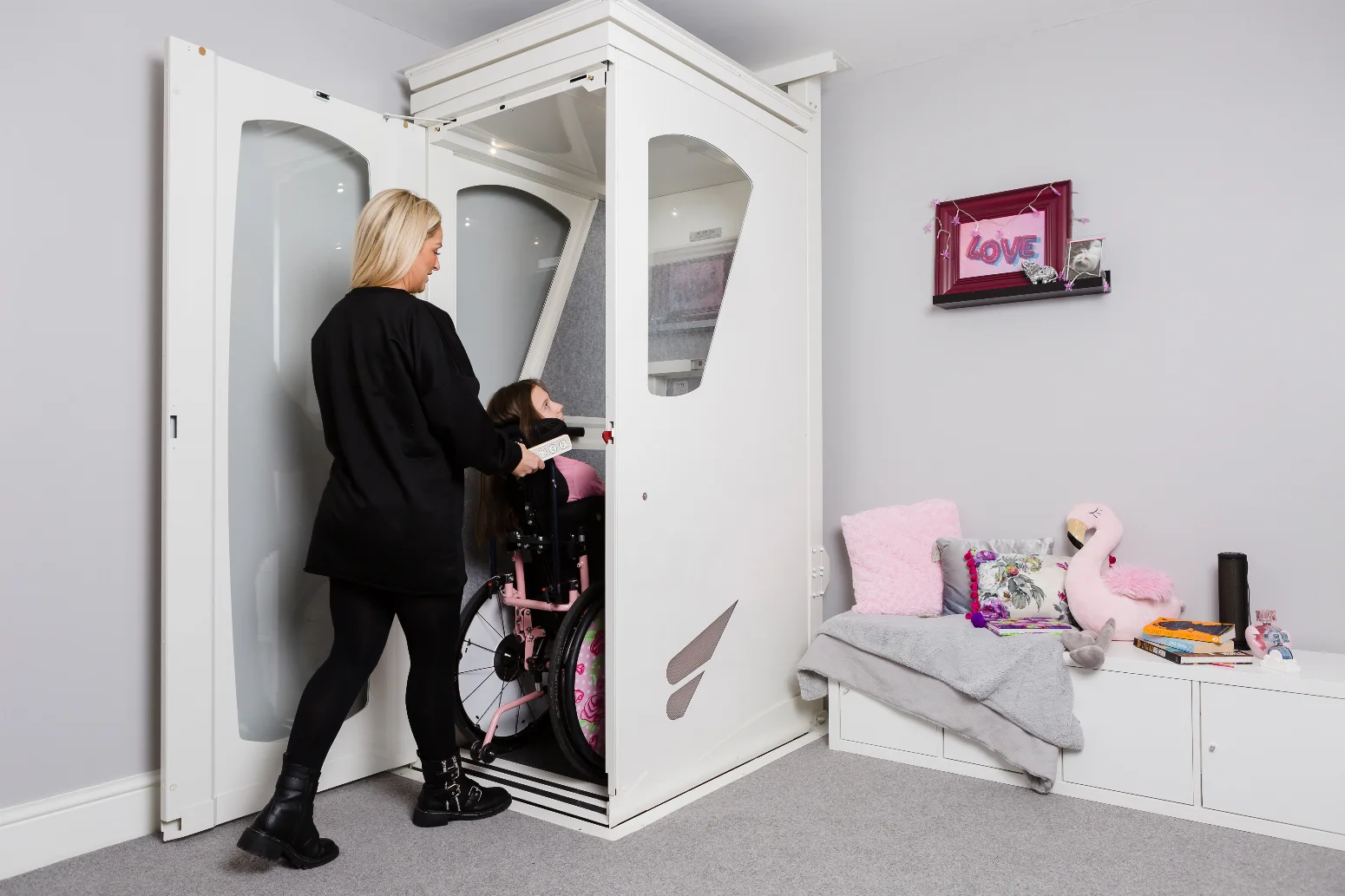
The right wheelchair home lift needs to work for the person, their occupied wheelchair and the route through the home. Start with the journey they need to make, then check the entrance, cabin and landing space for the exact model and configuration.
Decide which change in level you need to solve
Travelling from the ground floor to a bedroom needs a different proposal from getting over a few steps at an entrance. Write down the starting point, destination and floors or levels involved. Include whether someone will need to travel with the user or assist at either end.
For room-to-room travel between floors, the Stiltz Trio+ and Terry Harmony FE are examples to compare. A smaller rise might call for a different solution such as the Melody 1 platform lift. Compare the travel range for the model you are considering.
Measure the occupied wheelchair
Note the chair’s overall width and length with the user and their usual equipment in place. Include handles, footrests, joystick, headrest or other items that project beyond the chair. Estimate the combined weight of the person, wheelchair and equipment. If a companion will travel too, include their weight and the space they need.
Take those details to the survey and bring the chair to any demonstration. Ask for the clear door opening and usable cabin dimensions, including how handles, the ramp or other fittings affect the available space.
Work through boarding and leaving at both levels
Start in the room, hallway or landing, then trace the approach right up to the door or gate. Allow space to line up with the entrance. Consider the threshold and ramp, how the doors are operated, and whether the user can get clear of the lift once they leave it.
A through-entry lift can let someone enter on one side and leave on the opposite side. The Stiltz Trio+ ThruCar is an example. Check that the rooms have clear approaches on the appropriate sides. A single-entry layout can also work where the user can manage the route into and out of the lift.
Try the controls from the wheelchair
Check how easy it is to call the lift, operate the door or gate and reach the controls from the normal seated position. Ask whether the user will need to keep a button pressed during travel and whether any door assistance is standard or optional on the selected model.
Ask for a demonstration of what happens in a power cut and how the person can call for help. Find out who provides local servicing and what happens if the lift is temporarily out of use. Build those answers into the decision alongside the purchase price.
Take the practical details to a home survey
Bring the chair dimensions, combined load and notes about assistance. It also helps to take photos of likely positions on both levels. Ask for a drawing that shows the doors, approach space and any building work. Our home lift installation guide explains what to check before accepting a proposal.
Frequently asked questions
Will a powered wheelchair fit in any wheelchair home lift?
Fit depends on the individual chair, how it can manoeuvre at the entrances, and the total load. Ask the supplier to check the proposed configuration against the chair and user together.
What if the user needs a companion in the lift?
Confirm that the selected model permits that arrangement. The layout needs adequate room inside the cabin or on the platform as well as sufficient rated load.
Should I start with an enclosed cabin or a platform?
Start with the travel and the route into and out of the lift. Then compare suitable cabin or platform options using the home lift comparison table.